The Ultimate Guide to 360 Degree 4D Laser Level in the UK
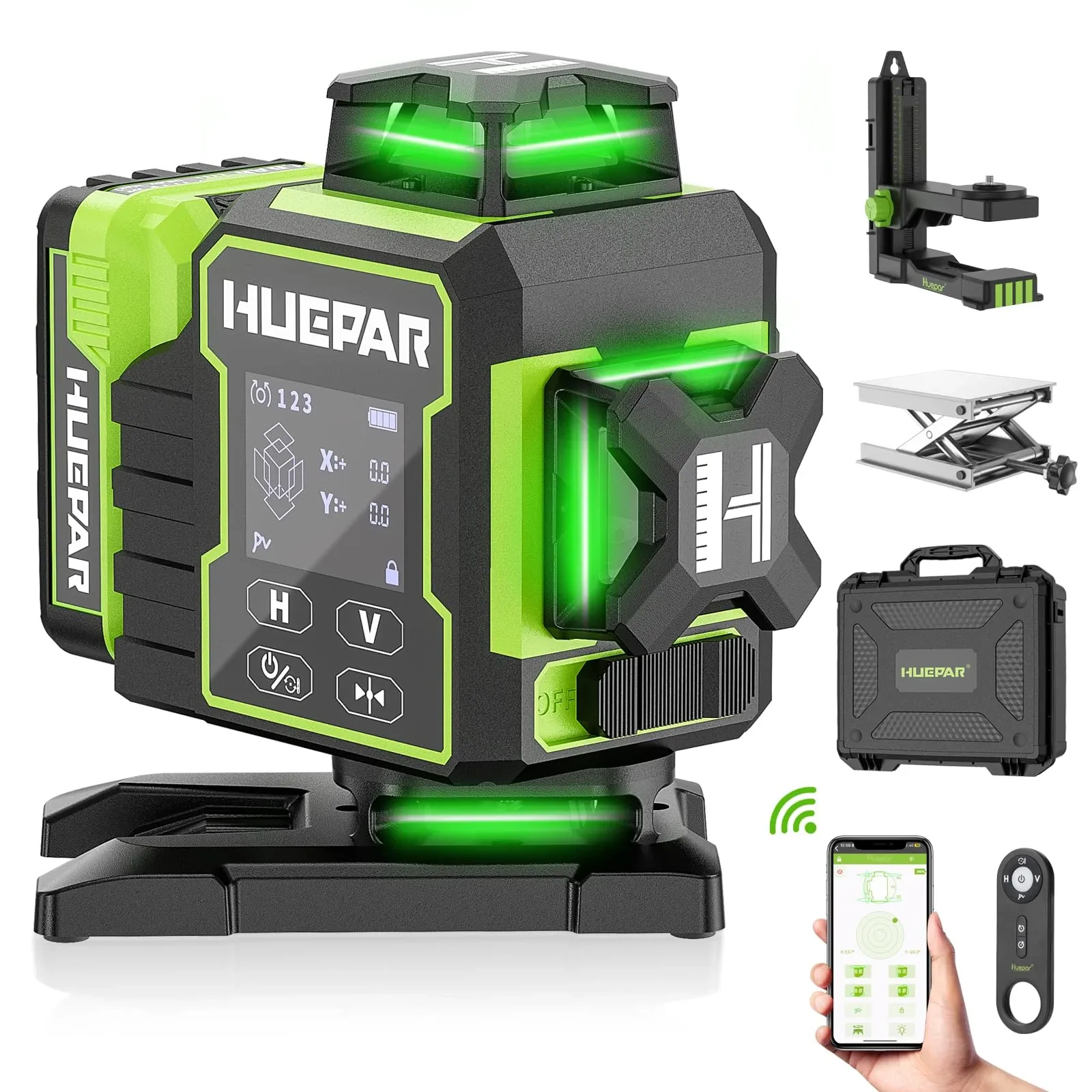
A 360 degree 4d laser level is a self-levelling layout tool that projects four full-room laser planes: two horizontal and two vertical. In practical terms, it helps UK tradespeople set out floors, ceilings, walls, tiling, cabinetry and partitioning faster and more accurately than a standard cross-line or 3D laser, especially because the lower horizontal beam sits close to floor level.
TL;DR: If you need accurate room-wide level, plumb and square references for flooring, tiling, stud work or kitchen fitting, a 360 degree 4d laser level is usually the best option. Based on our testing on typical UK renovation and fit-out jobs, the biggest advantage is the extra low horizontal line for floor work, while green beam visibility and reliable self-levelling matter most on bright sites.
Relying on a traditional spirit level and chalk line on a busy British construction site is often a fast track to costly rework. Whether you are dealing with bowed walls in a Victorian terrace or setting out a large open-plan commercial unit, layout errors waste time and reduce margin. Therefore, many installers now use 4D laser levels to create faster, more consistent reference lines across the whole room.
What are the key takeaways about a 360 degree 4D laser level?
- A 360 degree 4d laser level projects four distinct planes: two horizontal and two vertical for near-complete room coverage.
- The lower horizontal beam makes 4D models especially useful for floor screeding, tiling, skirting and underfloor heating layouts.
- According to the Chartered Institute of Building (CIOB), rework can account for up to 5% of a project's total contract value, so better layout accuracy can protect profitability.
- Green beam technology is typically easier to see than red in bright interior conditions common on UK sites.
- Reliable self-levelling helps maintain the tolerances expected on modern building and fit-out work in the UK.
What is a 360 degree 4D laser level?
A true 360 degree 4d laser level projects four independent 360-degree planes around a room. Unlike a basic cross-line laser that only throws lines forward, a 4D model creates continuous references around walls, across ceilings and close to the floor. As a result, you can set up once and work from one fixed datum rather than repeatedly repositioning the tool.
A proper 4D unit normally includes:
- Upper horizontal plane: Useful for suspended ceilings, downlight runs, coving and other high-level installations.
- Lower horizontal plane: Positioned just millimetres above the base for floor layouts, screeding, tile setting-out and skirting lines.
- Two vertical planes: Intersecting at 90 degrees to provide plumb references and square corners for stud walls, cabinetry and partitioning.
Because all four planes are projected through 360 degrees, they wrap around the workspace. Consequently, one person can check alignment on every wall without moving the instrument each time.
Why do UK tradespeople use a 360 degree 4D laser level?
The UK construction sector works to tight deadlines and strict expectations on finish quality. According to CIOB reporting on rework costs, poor setting-out can quickly become expensive once later trades are affected. For that reason, many installers now prefer tools that reduce repeat measuring and help maintain consistency across larger spaces.
Based on our testing during kitchen fitting, first-fix partitioning and tile preparation work, the standout benefit of a 4D unit is its low horizontal beam. Tilers can identify levels around an entire room more efficiently. Likewise, carpenters fitting skirting across uneven floors can keep one clean reference line throughout the space. In addition, ceiling installers gain an upper plane without sacrificing floor-level accuracy.
Is it better than using traditional levelling tools?
In most situations, yes. Historically, transferring datum lines often meant using water levels or spirit levels over short sections at a time. However, those methods are slower and more dependent on operator technique. A modern self-levelling laser allows one person to establish visible references far more quickly. Therefore, it suits busy refurbishment sites where speed and repeatability matter.
What is the difference between cross-line, 3D and 4D laser levels?
Selecting the right laser depends on your trade and typical workload. Nevertheless, understanding how each type differs makes buying decisions much easier.
What is a cross-line laser best for?
A basic cross-line model suits smaller tasks such as hanging shelves or aligning pictures. It projects forward-facing lines only, so it works well for localised jobs. On the other hand, if you need to carry one datum around an entire room, constant repositioning becomes inconvenient and introduces extra risk of error.
What is a 3D laser level best for?
A 3D laser usually gives you one horizontal plane plus two vertical planes in full 360 degrees. That makes it useful for ceiling grids, partitioning and general interior layout work. However, most units place their single horizontal plane well above floor height. As a result, floor tiling or screeding often involves measuring down repeatedly from an elevated line.
Why choose a 360 degree 4D laser level instead?
The key upgrade is the extra low horizontal plane near the base of the tool. That means you get one dedicated ceiling-height reference and another dedicated floor-level reference at the same time. Therefore, if your work includes flooring, skirting boards, underfloor heating runs or tile set-out as well as plumb wall work, a 360 degree 4d laser level is generally more versatile than both cross-line and standard 3D alternatives.
What should you look for when buying a 360 degree 4D laser level?
Not all units are equally suitable for demanding British site conditions. When comparing models from LevelGrid or other brands, focus on performance features that affect real-world accuracy rather than headline claims alone.
Should you choose green beam or red beam?
For most indoor trade applications in the UK, green beam is usually easier to see. Human vision detects green light more readily than red light under similar conditions. Consequently, green beams tend to stand out better in bright extensions, glazed interiors or open shell spaces with lots of daylight. For more detail, read our comprehensive Green Beam 4D Laser Level guide.
How important is self-levelling accuracy?
It is critical. A quality unit uses an internal pendulum system with dampening so it settles quickly after being placed on an uneven surface within its specified range. Based on our testing, faster stabilisation saves noticeable time during repeated setup through the day. In addition, accurate self-levelling helps maintain consistency when fitting kitchens, running dado lines or setting perimeter levels before screeding.
Ready to upgrade your layout speed with LevelGrid?
Get Yours Now — £406.22